
How to track the value of a Pokémon card collection

Record each card with its set, collector number and finish, then let market prices update the total for you. Those three details are what separate a two dollar reprint from a two hundred dollar original, and a list without them cannot be priced accurately.
What to record for each card
Set, collector number and finish are the minimum. Condition is worth adding for anything valuable, since the gap between Near Mint and Played can halve a card's price.
A spreadsheet works, but it goes stale the moment prices move, and re-pricing a few hundred rows by hand is the point where most people stop maintaining it.
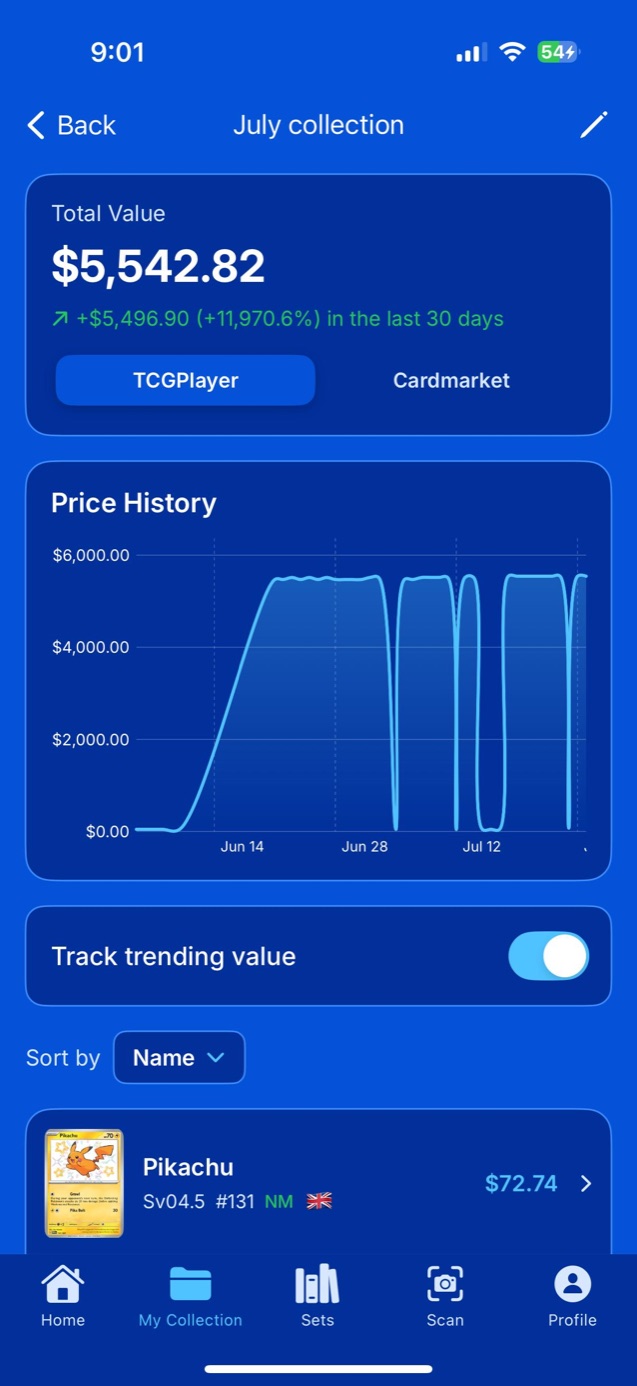
Why the total moves on its own
Collection value changes without you buying or selling anything, because it is calculated from live market prices. A quiet week can move a large collection by a noticeable amount.
Splitting cards into separate collections makes that movement readable. Keeping vintage apart from modern shows which part of the collection is actually driving the change.
Questions
Should I track cards I will never sell?
Yes, for insurance purposes if nothing else. A documented collection with per-card values is far easier to claim against than a shoebox and an estimate.
How often should I re-check the total?
Monthly is enough for most collections. Check more often only around set releases and reprint announcements, when prices actually move.